
IndustryInsights
Thoughts on enterprise technology, engineering practice, and the work that shapes how organizations build reliable systems.

Building Reliable Technology That Lasts: Our 10-Year Engineering Philosophy
Ten years in, the engineering philosophy that has carried AZENROB through hundreds of projects across telecom, finance, energy, and the public sector hasn't fundamentally changed. Reliability isn't a feature you add at the end. It's a discipline you commit to from day one.
The systems most likely to fail are the ones built with optimism. The systems most likely to last are the ones built with respectful skepticism — assuming networks will drop, services will crash, and humans will make mistakes.
The most expensive line of code is the one nobody can explain six months later.
— AZENROB Engineering PrincipleWhy Secure-by-Design Matters More Than Ever in 2026
Security used to be something you added to a system. That model has been quietly broken for years — and in 2026, with attack surfaces expanding faster than IT teams can patch them, it's officially obsolete.
Secure-by-design means security is part of the architecture conversation on day one — in how you scope user roles, structure data, handle errors, and log activity.
Retrofitting security is always more expensive than building it in. Always.
— Industry consensus, restated
5 Common Pitfalls in Enterprise Cloud Migration (And How to Avoid Them)
Cloud migration looks straightforward on paper. In practice, every enterprise we've helped through this transition has run into at least one of the same five problems.
- Underestimating data egress costs.
- Treating it as lift-and-shift when refactoring would have been cheaper.
- Ignoring identity and access management until late in the project.
- Skipping the dependency audit before cutover.
- Not building rollback paths into the migration plan.
The cloud rewards good architecture and punishes bad architecture — but louder, and faster.
— From a recent migration projectCase Study: Modernizing Network Infrastructure for an Azerbaijani Enterprise
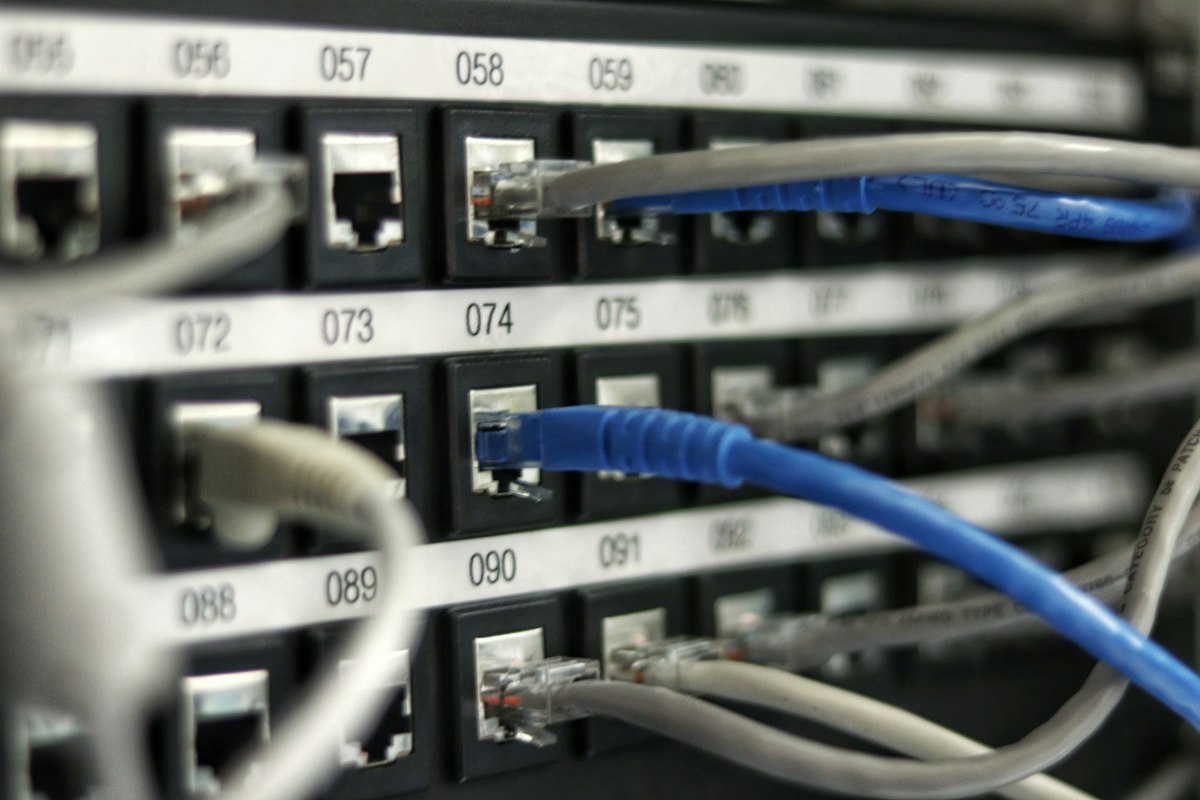
A long-standing enterprise client needed a modernized network supporting 400+ employees across three offices, zero downtime during transition, and an ISO 27001-aligned security posture.
We replaced the engine while the car was still moving. That's the kind of project network modernization always is.
— Project Lead, AZENROBLatency dropped by 40%. The dropped-VPN issue effectively disappeared. The new network is fully documented, monitored 24/7 from our NOC, and operates under a clear SLA.


The Hidden Cost of Manual Workflows: A Practical Look at Process Automation
There's a particular kind of work that nobody talks about in budget meetings — reports compiled by hand, invoices routed through three inboxes, data exported and re-imported manually. None of it is a line item. All of it costs real money.
When we do automation assessments, the first surprise is how much of this work is happening. The second is how cheap it is to fix.
The cheapest hour you can save is the one your team spends doing something the software should have done.
— AZENROB Automation PracticeAI in Enterprise IT: Beyond the Hype, What's Actually Working
Enterprise IT teams are now past the demo phase. AI isn't transforming IT through the use cases marketing decks predicted — it's transforming through smaller, specific applications nobody put on a roadmap.
- Intelligent document processing — invoices and contracts classified automatically.
- Helpdesk triage — routing tickets by content, not keywords.
- Code-assisted development — faster onboarding and task completion.
- Log analysis and anomaly detection.
The successful AI deployments aren't the ambitious ones. They're the narrow ones, done well.
— Pattern across 2025 enterprise rollouts

Building a Resilient Disaster Recovery Plan: A Step-by-Step Framework
Most disaster recovery plans share a common flaw: they exist on paper, never tested. A resilient DR plan is one you've actually run — recently, with the people who'd be involved if it were real.
- Define RTO and RPO per system.
- Map all system dependencies.
- Document recovery procedures step by step.
- Test annually at minimum.
- Review after every test, system change, and team change.
A DR plan you haven't tested isn't a plan. It's an aspiration.
— Standard observation in the fieldThe Rise of Hybrid Cloud: Why Most Enterprises Are Moving Beyond Pure Public Cloud
The all-public-cloud narrative has matured. In 2026, hybrid cloud architecture is taking hold — sometimes with a private cloud component, always with a governance layer that treats cloud spend as a continuously managed resource.
Cost discipline, data sovereignty requirements, and the maturity of hybrid management tools have all converged to make this practical to operate at scale.
The right question stopped being 'cloud or on-prem' years ago. The right question is 'which workload belongs where.'
— 2026 enterprise architecture reality
Building Reliable Technology That Lasts: Our 10-Year Engineering Philosophy
Ten years in, the engineering philosophy that has carried AZENROB through hundreds of projects across telecom, finance, energy, and the public sector hasn't fundamentally changed. Reliability isn't a feature you add at the end. It's a discipline you commit to from day one.
The systems most likely to fail are the ones built with optimism. The systems most likely to last are the ones built with respectful skepticism — assuming networks will drop, services will crash, and humans will make mistakes.
The most expensive line of code is the one nobody can explain six months later.
— AZENROB Engineering PrincipleCase Study: Modernizing Network Infrastructure for an Azerbaijani Enterprise
A long-standing enterprise client needed a modernized network supporting 400+ employees across three offices, zero downtime during transition, and an ISO 27001-aligned security posture.
We replaced the engine while the car was still moving. That's the kind of project network modernization always is.
— Project Lead, AZENROBLatency dropped by 40%. The dropped-VPN issue effectively disappeared. The new network is fully documented, monitored 24/7 from our NOC, and operates under a clear SLA.
5 Common Pitfalls in Enterprise Cloud Migration (And How to Avoid Them)
Cloud migration looks straightforward on paper. In practice, every enterprise we've helped through this transition has run into at least one of the same five problems.
- Underestimating data egress costs.
- Treating it as lift-and-shift when refactoring would have been cheaper.
- Ignoring identity and access management until late in the project.
- Skipping the dependency audit before cutover.
- Not building rollback paths into the migration plan.
The cloud rewards good architecture and punishes bad architecture — but louder, and faster.
— From a recent migration projectBuilding a Resilient Disaster Recovery Plan: A Step-by-Step Framework
Most disaster recovery plans share a common flaw: they exist on paper, never tested. A resilient DR plan is one you've actually run — recently, with the people who'd be involved if it were real.
- Define RTO and RPO per system.
- Map all system dependencies.
- Document recovery procedures step by step.
- Test annually at minimum.
- Review after every test, system change, and team change.
A DR plan you haven't tested isn't a plan. It's an aspiration.
— Standard observation in the fieldAI in Enterprise IT: Beyond the Hype, What's Actually Working
Enterprise IT teams are now past the demo phase. AI isn't transforming IT through the use cases marketing decks predicted — it's transforming through smaller, specific applications nobody put on a roadmap.
- Intelligent document processing — invoices and contracts classified automatically.
- Helpdesk triage — routing tickets by content, not keywords.
- Code-assisted development — faster onboarding and task completion.
- Log analysis and anomaly detection.
The successful AI deployments aren't the ambitious ones. They're the narrow ones, done well.
— Pattern across 2025 enterprise rolloutsThe Rise of Hybrid Cloud: Why Most Enterprises Are Moving Beyond Pure Public Cloud
The all-public-cloud narrative has matured. In 2026, hybrid cloud architecture is taking hold — sometimes with a private cloud component, always with a governance layer that treats cloud spend as a continuously managed resource.
Cost discipline, data sovereignty requirements, and the maturity of hybrid management tools have all converged to make this practical to operate at scale.
The right question stopped being 'cloud or on-prem' years ago. The right question is 'which workload belongs where.'
— 2026 enterprise architecture realityWhy Secure-by-Design Matters More Than Ever in 2026
Security used to be something you added to a system. That model has been quietly broken for years — and in 2026, with attack surfaces expanding faster than IT teams can patch them, it's officially obsolete.
Secure-by-design means security is part of the architecture conversation on day one — in how you scope user roles, structure data, handle errors, and log activity.
Retrofitting security is always more expensive than building it in. Always.
— Industry consensus, restatedThe Hidden Cost of Manual Workflows: A Practical Look at Process Automation
There's a particular kind of work that nobody talks about in budget meetings — reports compiled by hand, invoices routed through three inboxes, data exported and re-imported manually. None of it is a line item. All of it costs real money.
When we do automation assessments, the first surprise is how much of this work is happening. The second is how cheap it is to fix.
The cheapest hour you can save is the one your team spends doing something the software should have done.
— AZENROB Automation PracticeYou're subscribed!
Look out for our next monthly roundup of insights, landing in your inbox soon.